Tongariro Alpine Crossing Packing List 2026 — What to Wear, What to Carry, What to Leave Behind
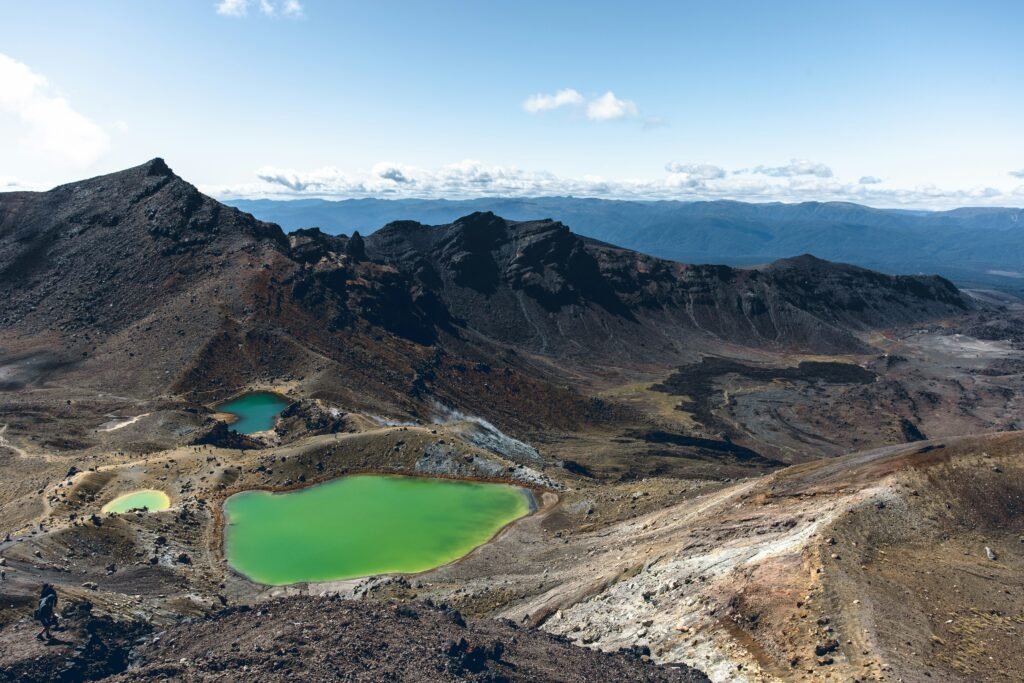
Tongariro Alpine Crossing Packing List 2026 — What to Wear, What to Carry, What to Leave Behind
Let’s get one thing out of the way first. The Tongariro Alpine Crossing is not a stroll. It is 19.4 kilometres across an active volcanic plateau in a part of New Zealand where the weather changes its mind several times before lunch. It is also one of the most extraordinary single days you will ever have on this planet. The difference between a good day and a very bad one is almost entirely what you put in your bag the night before.
In this guide
Tongariro Alpine Crossing packing list — mandatory gear
There are DOC rangers at the Mangatepopo trailhead. Their job is partly to check that you have what you need to survive the crossing. This is not bureaucracy. It is because every year people show up in cotton t-shirts and canvas shoes and end up in a helicopter they did not budget for.
The following is not a suggested list. It is the list.
On ponchos: A poncho is not a rain jacket. In the wind that lives permanently above Red Crater, a poncho becomes a sail. DOC rangers know this and will send you back to your shuttle. Bring a proper waterproof shell — Gore-Tex or equivalent hardshell construction. This is the one item where spending more money genuinely matters.
| Item | Status | Notes |
|---|---|---|
| Waterproof rain jacket | Mandatory | Hardshell, fully waterproof. Not water-resistant. Not a poncho. Not your dad’s fishing jacket from 1987. |
| Sturdy footwear | Mandatory | Hiking boots strongly preferred. Good trail runners accepted in summer. Jandals are for the beach. The beach is not here. |
| Warm mid layer | Mandatory | Fleece or insulated jacket. No cotton — it holds moisture and gets cold. Merino or synthetic only. |
| Water — minimum 2 litres | Mandatory | There is no water on the track. None. Bring more than you think you need. |
| Food for a full day | Mandatory | No cafes. No vendors. No pie until you’re done. Pack enough for eight hours. |
| Daypack — 20 to 30 litres | Mandatory | Needs to carry all of the above without destroying your back. Fit matters — try it on before you go. |
What to wear — the layering system
The Tongariro Crossing starts somewhere warm and ends somewhere that has forgotten warmth entirely. The car park at Mangatepopo can be 18 degrees and still. The saddle above Red Crater can be 6 degrees with 70 kilometre winds and a cloud sitting directly on your head. Sometimes both happen on the same day.
The layering system exists to handle this. Three layers, each doing a different job, all working together. Here is what each one does.
Base layer — the one against your skin
Merino wool. That is the answer. New Zealand figured this out a long time ago — the sheep were a clue. Merino regulates temperature in both directions, manages sweat without getting rank, and does not lose its insulating value when it gets damp. The Icebreaker 150 or 200 weight is the standard recommendation for the crossing — light enough for the forest sections at the start, warm enough when the plateau opens up and the wind finds you.
Under no circumstances should you wear cotton next to your skin. Cotton holds moisture, gets cold, and stays cold. A wet cotton t-shirt at 1,800 metres in a southerly is a medical situation, not a discomfort.
Icebreaker 200 Oasis Long Sleeve — Wild Kiwi pick
Made from New Zealand merino. The 200 weight is the sweet spot for the Tongariro Crossing — warm at the summit, not sweltering through the forest. Available in men’s and women’s versions. This is the one item we’d tell you to buy before anything else.
Check price on Amazon →Mid layer — your insulation buffer
This is the layer you will put on and take off the most. At the bottom of the Devil’s Staircase you will want to remove it. At the top of Red Crater you will wish you had two of them. A 200 weight fleece or a lightweight down jacket is right for summer. For shoulder season — October, April, May — go heavier. A 300 weight fleece or a more substantial down layer.
Down is warmer for the weight but loses insulation when wet. If your rain jacket is doing its job, this should not matter. If your rain jacket is not doing its job, you have bigger problems than your mid layer.
Outer layer — your waterproof shell
This is where people make the mistake that ends their day. A waterproof jacket means Gore-Tex, eVent, or equivalent hardshell construction — fully seam-sealed, rated for sustained rain. The test is not whether it looks waterproof. The test is whether it keeps you dry for six hours in sideways rain. If you are not sure, the answer is probably no.
Waterproof trousers deserve a mention. In summer, most people survive without them. In shoulder season they are worth their weight in comfort. In spring and autumn, pack them regardless and decide on the day.
Hat and gloves
A merino beanie and thin gloves. They weigh almost nothing. They matter enormously at 1,886 metres when the wind comes over Red Crater from the south. Pack them regardless of the forecast. The forecast is advisory. The mountain is not.
Sun protection
New Zealand sits at the edge of the ozone hole. The UV levels here are genuinely extreme — among the highest measured anywhere on earth. The Tongariro plateau is above the treeline, fully exposed, at altitude, often with volcanic rock reflecting light back at you. SPF50+ sunscreen applied properly and reapplied every two hours. A wide-brim hat. UV-rated sunglasses. None of these are optional in summer.
What to carry in your daypack
| Item | Status | Notes |
|---|---|---|
| Water — 2 to 3 litres | Essential | Drink extra the night before. Drink a litre before you start. Then carry three litres. There is no water on the track. |
| Food for a full day | Essential | Sandwiches, muesli bars, nuts, dried fruit. Enough for eight hours of moving. The pie is waiting at the end. Get there first. |
| Sunscreen SPF50+ | Essential | Reapply every two hours. NZ UV is not a joke. |
| Sunglasses — UV rated | Essential | Glare off volcanic rock and snow is intense. Fashion sunglasses with no UV rating are worse than nothing. |
| Basic first aid kit | Essential | Plasters, blister treatment, paracetamol, a bandage. Small and light. Worth having. |
| Offline map downloaded | Essential | Cell coverage drops out and stays out across most of the plateau. Download the track on Maps.me or NZ Topo50 before you leave the hotel. |
| Fully charged phone | Essential | Emergency contact and the best camera you own. Bring a portable battery — cold and altitude drain batteries faster than you expect. |
| Rubbish bag | Essential | Pack out everything you carry in. The Tongariro is a sacred place to Māori. Leave it exactly as you found it. |
| Toilet paper and hand sanitiser | Essential | Toilets at both trailheads and one mid-track. Carry your own as backup. The mountain does not provide. |
| Hiking poles | Optional | The Red Crater descent is steep loose scree. Poles make it significantly less terrifying. Worth borrowing or hiring if you have dodgy knees. |
| Portable battery pack | Recommended | The Emerald Lakes deserve proper photos. Do not let a dead phone deny you that. |
| Personal Locator Beacon (PLB) | Recommended | Hireable in Turangi for around NZ$25. Strongly recommended for solo walkers and shoulder season. If something goes wrong up there, this is how help finds you. |
What changes by season
The Tongariro Crossing is open year-round in theory. In practice, winter turns it into a serious alpine route that requires specialist equipment and experience. Here is what each season actually means for your packing list.
The best window. No specialist gear beyond this list. Start before 7am — the track sees up to 1,500 people a day in January and February, and the afternoon clouds tend to make their opinions known around 2pm. Book your shuttle well ahead. The volcano is beautiful and it is also very crowded.
Fewer people. Often stunning. The light is different — longer shadows, colder air, colours that summer does not quite manage. Bring warmer layers and waterproof trousers. Snow is possible at the summit. Check MetService the morning of. Be prepared to turn around if conditions change — the track will be there next time.
Quiet and often spectacular. Snow at altitude is likely. Waterproof trousers are not optional. The days are shorter — start early and move with purpose. The track is not lit. You do not want to finish in the dark.
This is an alpine route. Crampons, ice axe, and the experience to use them. If that sentence means nothing to you, book a guided winter trip — they are excellent and the scenery is extraordinary. Do not attempt it independently without proper alpine skills. The mountain does not grade on enthusiasm.
2026 note: Mangatepopo Road is currently closed to private vehicles following recent fires in Tongariro National Park. A shuttle is mandatory to access the trailhead — you cannot drive yourself to the start. A rāhui (cultural and restorative restriction) is also in place over affected areas. Stay on the marked track. This land is healing and it deserves the space to do so.
Our top gear picks for the Tongariro Crossing
Every recommendation below has been chosen for NZ conditions specifically — not just because it is popular globally. The Tongariro plateau has its own particular combination of UV, wind, loose volcanic scree, and unpredictable precipitation that rewards gear built for this kind of environment.
Hiking boots
Mid-cut, waterproof membrane, grippy outsole. The Red Crater descent is steep loose scree — ankle support is not vanity, it is function. These are our two picks:
Salomon X Ultra 4 Mid GTX — best overall
Lightweight for a waterproof boot, excellent grip on volcanic rock, and protective enough for the loose sections on the descent. The mid-cut provides real ankle support without the weight of a full mountaineering boot. One of the most common boots on the crossing for a reason.
Check price on Amazon →Macpac Traverse II — best NZ brand pick
Designed in New Zealand for New Zealand terrain. Waterproof, supportive, well-priced. If you want a boot that was built with this exact environment in mind, this is it. Available in Macpac stores nationwide and online.
View at Macpac →Rain jacket
Macpac Mistral Hardshell — our pick
Fully waterproof, seam-sealed, packs small, breathes on the climbs. Has kept thousands of people dry on this exact track. If you only buy one piece of gear for the Tongariro Crossing, make it a proper rain jacket and make it this one.
View at Macpac →Daypack
Osprey Talon 22 — our pick
Twenty-two litres is the sweet spot. Fits everything on this packing list with room for the layers you take off mid-track. The ventilated back panel matters on the climb up to South Crater — you will be sweating regardless, but at least your back gets some airflow. Comes with a rain cover built in.
Check price on Amazon →Merino base layer
Icebreaker 200 Oasis — our pick
New Zealand merino, made by a New Zealand company. The 200 weight handles the full range of temperatures you will encounter on the crossing. Soft enough to wear all day, tough enough to handle sweat and wind and whatever the plateau decides to throw at you.
Check price on Amazon →Getting there and booking
The Tongariro Alpine Crossing is a one-way track. You start at Mangatepopo and finish at Ketetahi — 19.4 kilometres apart. You cannot park at one end and walk back. You need a shuttle.
- Shuttles depart from Turangi, Taupo, and National Park Village — book at least one to two weeks ahead in summer, further in January and February
- A free DOC booking is required for all visitors — book on the DOC website before you go
- Mangatepopo Road is closed to private vehicles in 2026 — the shuttle is not optional this season
- Start before 7am if you can — the track is quieter, cooler, and the light on the volcanic landscape in the early morning is worth getting out of bed for
- Check the MetService Tongariro forecast the day before and again on the morning of your walk — the crossing is sometimes closed due to weather and there are no refunds on regret
- If conditions are bad on the day, postpone. The crossing will be there tomorrow. It has been there for 27,000 years.
For international visitors: From late 2027, international visitors will be required to pay a fee to walk the Tongariro Alpine Crossing. This is not yet in effect for 2026 — it is currently free for everyone. Worth knowing if you are planning ahead.
Frequently asked questions
Do I need to book to walk the Tongariro Alpine Crossing?
Yes — a free DOC booking is required. You also need to separately book a shuttle, because parking at the trailhead has a four-hour limit and the crossing takes considerably longer than four hours. Both bookings can be made online before you travel.
How fit do I need to be?
Genuinely fit. This is a challenging day walk — 19.4 kilometres with significant elevation gain and some steep, exposed sections. If you regularly walk 10+ kilometres with some hills, you will be fine in summer conditions. If your most recent exercise was walking from the hotel to the restaurant, add extra time and be honest with yourself about pace.
Can I wear trail runners instead of hiking boots?
In good summer conditions, a proper trail runner with grip is acceptable. In shoulder season or if any rain is forecast, waterproof boots with ankle support are the right call. Jandals, sneakers, and fashion trainers are turned back at the trailhead. If you are unsure, wear boots.
Is there any water on the track?
No. There are no drinkable water sources on the Tongariro Alpine Crossing. Bring a minimum of two litres per person. In hot weather or if you are a heavy sweater, bring three. Dehydration at altitude in UV-intense conditions is unpleasant in a way that is entirely preventable.
What is the best time of year to do the crossing?
November, March, and April are the sweet spot — reliable weather, manageable crowds, and the light is often better than the height of summer. December to February has the most stable conditions but also the most people. Always check MetService before you go. Even in summer, the crossing can be closed or genuinely unsafe due to weather. The mountain does not negotiate.
Can I do it in winter?
Yes — but it becomes a serious alpine undertaking requiring crampons, an ice axe, and the knowledge to use both. If those words are unfamiliar, book a guided winter trip. They are well-run, the scenery is extraordinary, and you will come back with all the same fingers you started with.
Is the Tongariro Crossing safe?
In summer, with appropriate gear and a reasonable weather window, yes — it is one of New Zealand’s most accessible alpine experiences. It also has the highest search and rescue rate of any NZ track. The gap between those two things is almost always gear and preparation. Which is why you are reading this.
What’s next? Planning more of your NZ trip? Read our complete NZ Great Walks guide — all nine walks compared, with gear lists for each. Or if you still need footwear sorted, our best hiking boots NZ guide will help you choose before you go.